Europe's Contenders: A Tactical Power Rankings for World Cup 2026
Spain, France, England, Portugal, Germany, and the Netherlands all arrive in North America with genuine trophy aspirations. This analysis breaks down each squad's tactical identity, key vulnerabilities, and realistic tournament ceiling as the group stage begins.
Europe's Contenders: A Tactical Guide to the 2026 World Cup
The World Cup has begun, and Europe — as usual — has sent its heaviest artillery. Six of the top eight teams in current sportsbook odds are European, with Spain (+450) and France (+500) sitting side by side at the summit. 1 England (+650) and Portugal (+800) follow close behind, while Germany (+1300) and the Netherlands (+1600) complete a remarkably stacked continental delegation. 1
This piece takes each of the main European contenders apart — how they're built, where they're vulnerable, and what a realistic ceiling looks like for each.
Spain: the defending champions under pressure
Spain arrive as European champions, the odds-on favourite, and arguably the most coherent tactical unit in the tournament. Luis de la Fuente's side built Euro 2024 around positional dominance and a relentless engine room, and they've carried that identity into 2026. The concern is 18-year-old Lamine Yamal, who entered the tournament carrying an injury — and Spain's ability to break deep blocks, already their most tested weakness, diminishes sharply without his capacity to carry the ball at full speed and attract double-teams. 2
The projected XI still looks formidable, with Pedri and Fabián Ruiz controlling the middle third and Mikel Oyarzabal as the striker best equipped to profit from Spain's combination play. Oyarzabal is a compelling Golden Boot candidate precisely because Spain will likely go deep and their system generates high-quality chances close to goal. 2
Ceiling: Final. Risk: Yamal fitness — and a draw that could place them on a collision course with France before the final.
France: strength in depth as a competitive moat
Spain may have the identity, but France have the roster volume. Didier Deschamps fielded a B team against Colombia in March's international break and won 3-1. Their A side — Mbappé operating as the focal attacking threat, Michael Olise drifting inside from the right, Marcus Thuram available from the bench — is the kind of attacking depth that only Brazil in 2002 has matched in modern tournament football. 3
The structural concern runs through the full-back positions. Neither slot has a world-class option. But as a counter-argument: France's last two World Cup finals (2018, 2022) were largely built on absorbing pressure and transitioning at speed, which doesn't demand elite full-backs in possession. Deschamps' cautious conservatism, often criticised in the press, has delivered two finals in eight years. That is difficult to argue with.
Mbappé already has 12 World Cup goals entering this tournament — just six short of Miroslav Klose's all-time record. No player has ever won the Golden Boot twice. This is the tournament where he attempts both firsts. 2
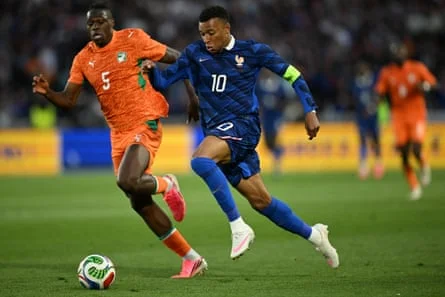
Ceiling: Champions. Risk: Deschamps' reluctance to play Olise centrally may waste the best creative player in the squad.
England: the Tuchel question
Thomas Tuchel is, on the available evidence, a better manager than Gareth Southgate. He won a Champions League with Chelsea. He reached two finals at PSG and two semi-finals at Bayern. His strength is precisely what England have lacked under every manager since 2002: a willingness to be tactically flexible inside a tournament, adapting game-to-game rather than identifying one shape and hoping opponents don't solve it. 3
England's squad has real attack depth — Kane at his peak, Saka consistently Europe's most efficient wide forward over 18 months, Bellingham still only 22, Cole Palmer emerging as a genuine clutch performer. The anxieties cluster at the back and in deeper midfield. Phil Foden and Trent Alexander-Arnold are both doubts to make the final squad; if they miss out, England lack creativity from deep. 3
The group (Croatia, Ghana, Panama) is manageable. England's genuine test comes in the knockout stage, likely against a South American heavyweight at altitude in Mexico — which has historically been the graveyard for European ambition. Multiple Guardian writers see England meeting France in the quarter-final. A more optimistic reading: if Tuchel's preparation for those conditions is serious (and early reporting suggests it is), England reach the semi-final. 2
Ceiling: Semi-final. Risk: Altitude and heat management in knockout rounds — and the recurrent question of whether England's centre-back options are good enough against elite strikers.
Portugal: last dance, genuine threat
Portugal are +800, fourth in the odds, and carry two parallel narratives that are pulling in different directions. 1 The older narrative is Cristiano Ronaldo's farewell World Cup — whether that presence is an asset or a distraction has been debated since Qatar 2022. The newer one is Vitinha and Bruno Fernandes driving a midfield that, when functioning, is among the most technically precise in Europe, with Rafael Leão and Pedro Neto providing the pace to exploit space in transition.
Portugal's projected XI plays a 4-3-3 with Ronaldo up front. Whether Roberto Martínez persists with that at the cost of better structural balance will define how far they go. Spain's Jonathan Wilson writes that "the Portugal debate" — Ronaldo's role — "appears to be much hotter in the media than inside the coaching staff," which suggests Martínez has already made his decision and is simply not surfacing it. 2
Loading chart…
Ceiling: Final (if Martínez finds the right balance). Risk: Over-reliance on an ageing forward when Portugal's real quality lives in midfield.
Germany: the return to relevance
Germany have not won a knockout World Cup game since lifting the trophy in 2014. This time feels different, in a limited but real sense. 4 Julian Nagelsmann has Florian Wirtz and Jamal Musiala — the two most technically gifted central midfielders Germany have produced since Özil — available simultaneously, and both are recovering from difficult club campaigns to face a tournament where the pace is slower and the pressure suits their capacity for decisive moments. 3
The fragility runs at both ends. Manuel Neuer has retired; Marc-André ter Stegen has recurring injuries; Oliver Baumann, 35, appears likely to start. Up front, the striker options are genuinely thin — Woltemade and Undav are serviceable but neither commands a game. Germany's model depends on Wirtz and Musiala generating enough to carry average finishing. In group-stage games that may be enough. Against France or Spain in a knockout it probably requires one of them to have the game of their career. 3
Ceiling: Quarter-final. Risk: The striker problem and goalkeeping uncertainty remain unresolved. Nagelsmann needs Wirtz and Musiala both fully fit and at their best — simultaneously.
Netherlands: the defensive anchor and forward uncertainty
Ronald Koeman's Netherlands enter as the 7th-ranked European side in the odds (+1600) but are arguably more dangerous than that price implies. 1 Virgil van Dijk at the heart of the defence remains a genuinely world-class centre-back, Denzel Dumfries is one of the most productive wing-backs at the tournament, and the Frenkie de Jong / Ryan Gravenberch double pivot is, when functioning, capable of controlling games against all but the top two or three sides. 3
The forward question is unresolved. Memphis Depay is the nominal first choice but carries form doubts. The supporting cast — Noa Lang, Wout Weghorst, Brian Brobbey — is a collection of useful players rather than a reliable scoring unit. In a tournament where Spain, France, and Argentina will all press from high and close down passing lanes, Netherlands may find their midfield play — their most reliable asset — squeezed. Group F includes Japan, Sweden, and Tunisia, which gives Koeman space to find his best combination before a knockoutstage that could turn violent quickly.
Ceiling: Semi-final if the striker question resolves. Risk: Scoring volume — Netherlands averaged just over one goal per game in qualifying.
The broader European picture
Italy are absent after losing to Bosnia-Herzegovina in the European playoffs, arguably the most embarrassing qualification failure since 2018 — ending a run of three consecutive finals or semi-finals for the Azzurri. 4 Belgium, led by Kevin De Bruyne and Jérémy Doku, are the European sleeper pick: free of the pressure that weighed on their golden generation, with a cleaner roster and +2200 odds that look generous if Romelu Lukaku returns to fitness. 1
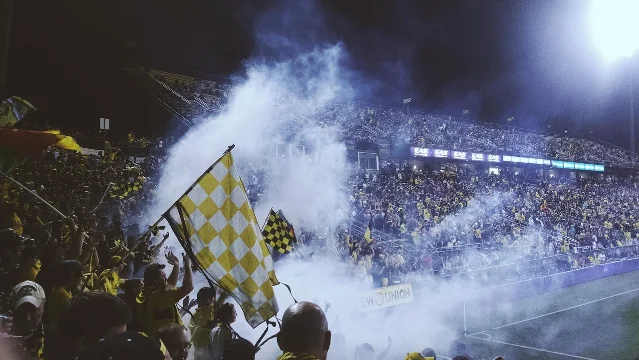
The structural question for European football at this tournament is not which team wins — any of Spain, France, or England could realistically lift the trophy — but whether Europe's tactical maturity (high press, positional structure, midfield dominance) holds up in the extreme heat and at altitude in Mexico City. Semi-finals and finals played at sea level in the United States favour the European model. Earlier knockout games in Mexico, at over 2,200 metres, raise a different problem entirely. That is the wrinkle every European coaching staff is solving for between now and the quarter-finals.
What to track over the next two weeks
- Yamal's fitness updates ahead of Spain's first knockout game — the gap between a fit and injured Yamal is the difference between Spain being the clear favourite and a shakeable one.
- France's full-back selection in the first two group games — if Deschamps finds an answer to that weakness early, Les Bleus become harder to beat.
- Germany vs Ivory Coast (June 20) — a real test of whether Nagelsmann's system holds against athletic pressure.
- Netherlands vs Japan (June 14) — an immediate stress test of the Dutch defensive structure against a team with a very different pressing style.
- England's altitude preparation: their group-stage games are at sea level. If they win Group L and face a high-seeded South American team in Mexico, Tuchel's preparation choices will come into sharp focus.
Add more perspectives or context around this Post.